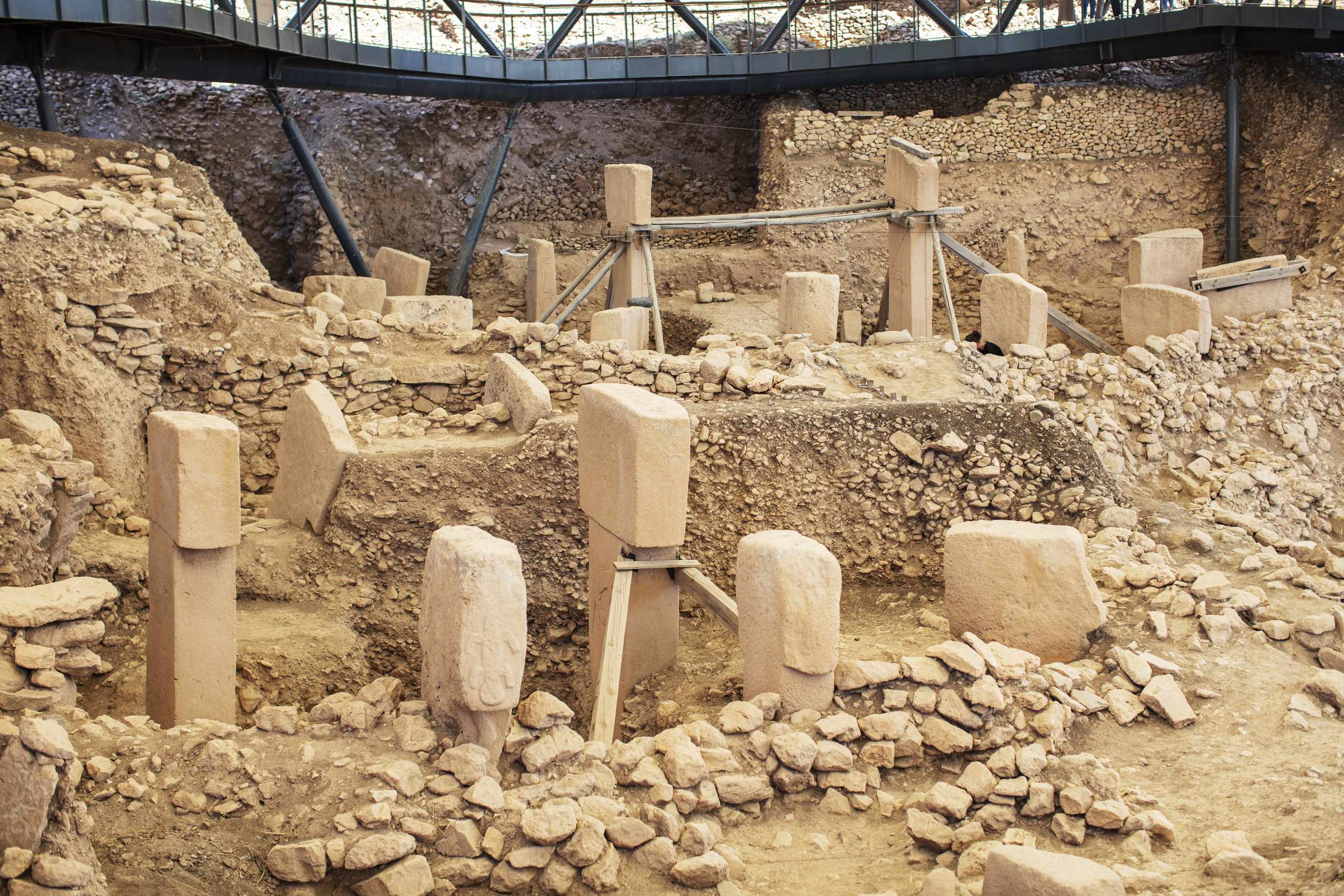
Even if you pick up a piece of pottery next to a wall, it doesn’t necessarily mean it is significant! What layer was it in? Was it in a sealed deposit? Was it close to a disturbance? How deep down was it? Were there any other things nearby, like charcoal, bones, metal, or other sherds? Without knowing the context, we lose valuable information about what the artifact could tell us about the site. Archaeological context is the relationship between an artifact and the place where it was found. This includes the excavation unit, grid reference, depth, soil matrix, layer, associated features, and other finds.
Provenience is the actual location of the artifact at the site. Context is crucial because it allows us to compare finds to each other and establish a sequence of events. Even a plain, undecorated sherd from a well-documented deposit could be more useful than a beautiful sherd from an unknown location. Let’s say we have two identical sherd fragments. The first was found inside a sealed deposit below a collapsed floor.
The second was found in loose dirt by the footpath. The first sherd might help us to connect the floor collapse to other evidence from that deposit. However, the second sherd could have been moved by erosion, construction, animals, people, or prior excavation. The physical nature of the sherd has not changed, but the interpretive power of the find has. That is why we don’t assess an artifact based only on age, aesthetic appeal, rarity, or material. You need to record the artifact before you remove it. This means assigning the artifact a find number, which will link it to your field notes, photographs, context sheet, and plan drawing. You also need to record its grid reference and depth from an established grid or datum point. You need to describe the deposit the artifact was in while you are still able to see it, including soil color, texture, inclusions, boundaries, and signs of disturbance.
Once you lift the artifact and remove the soil, you cannot recreate these relationships. You can practice recording context without excavating! Pick an image of a mock excavation unit and select one artifact. Make two descriptions. For the first, describe the artifact’s material, form, surface, and condition. For the second, add the artifact’s position, layer, depth, associated features, and other finds. Look at the two records. The first describes what the artifact looks like; the second starts to explain why it is significant within the site. Sometimes, beginners jump too quickly to interpretations. A dark patch of soil might be called a hearth without checking the boundaries, contents, and stratigraphy. A metal artifact might be assigned a function solely based on its shape.
A cluster of sherds might be assumed to be a whole pot, when it could have come from multiple deposits. A strong record distinguishes between what is observed and what is interpreted. “Dark soil with charcoal flecks” is an observation. “Possible hearth deposit” is an interpretation that still needs to be supported with evidence. A good way to check your work is to imagine the artifact is already in its archive bag. Could someone else use your find number, field notes, photographs, and drawings to figure out where the artifact was originally located and what the surrounding deposit looked like? If not, you are missing critical context. Archaeology does not start with “What did we find?” It starts with, “Where was it? What was around it? And what relationships were intact before it was removed?”